Memory takes effort.
Manual check-ins interrupt the day. Most people will not build a complete location journal by hand.
 Parmis Meshgi
Independent product · iOS
Remember where life happened without giving that history to another service.
Open on the App Store ↗
Concept, flow, interface, and release story
Automatic location journal
Version 1.0.31 verified September 10
With local-only data ownership
Project value
Record a day with little manual work.
Turn raw location points into a readable personal story.
Keep ownership clear through local storage and direct export.
Manual check-ins interrupt the day. Most people will not build a complete location journal by hand.
A useful record can also expose home, work, travel, and repeated habits.
The product should collect enough context to help, while keeping the record on the device.
Design decisions
Footsteps records visits and movement in the background. The user does not rebuild the day by hand.
More complete days with fewer repeated actions.
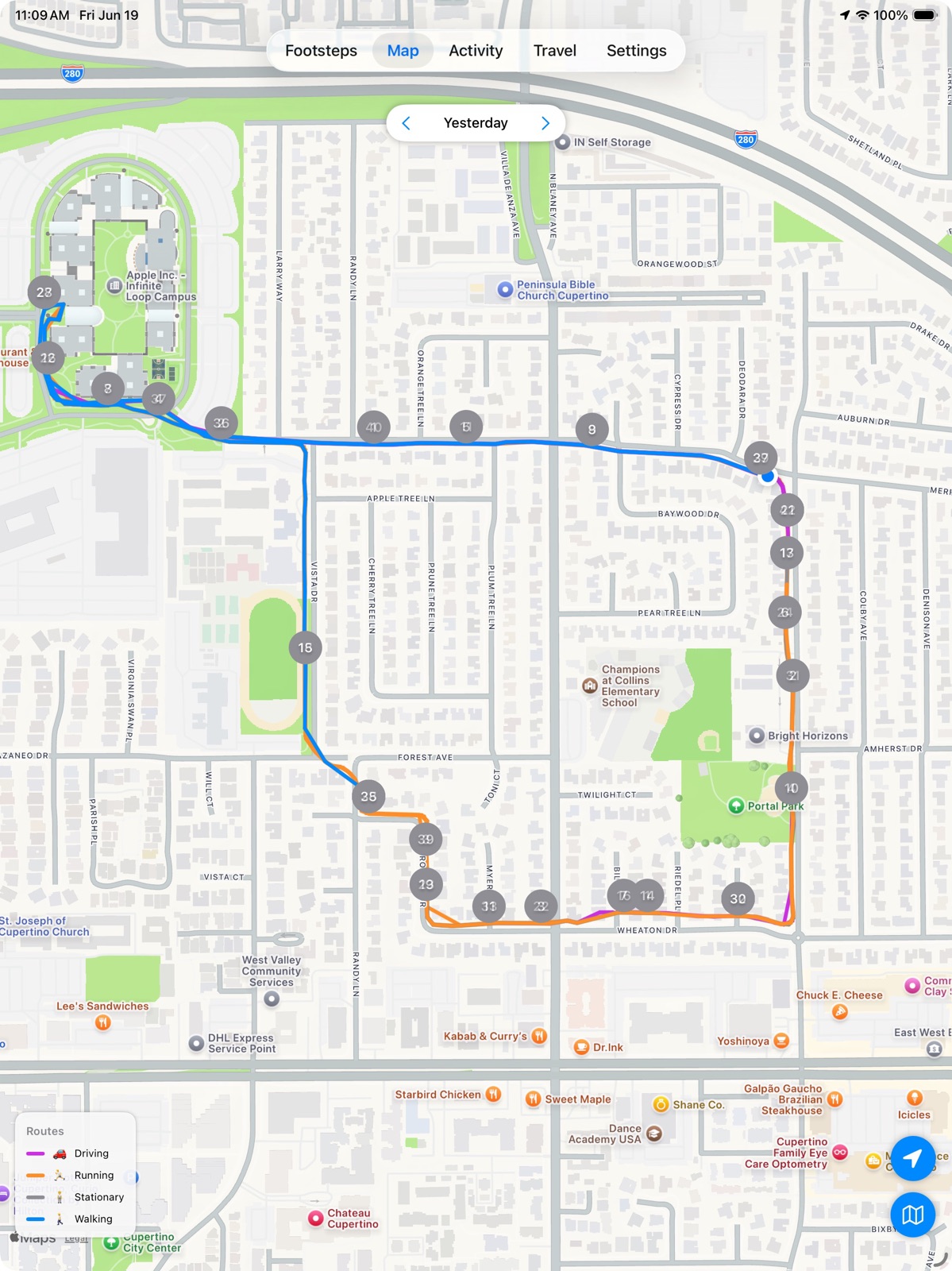
Places, travel modes, duration, and maps form one chronological story.
Users can understand where time went without reading raw location data.
The opening flow explains local storage, no cloud sync, no analytics, and no account.
People see the privacy boundary before granting sensitive access.
CSV and JSON exports let people take places, visits, and activities elsewhere.
The journal remains useful outside the app.
Product proof
A full route shows where the day happened.
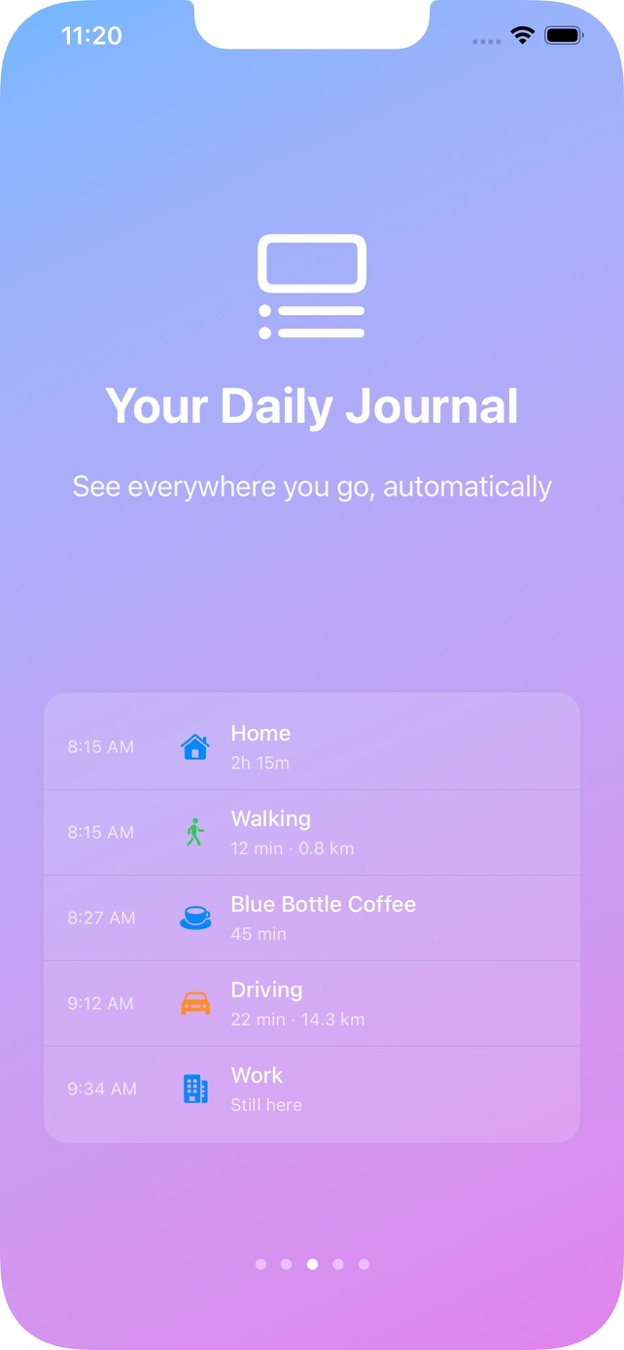
The product explains automatic capture through a familiar daily view.
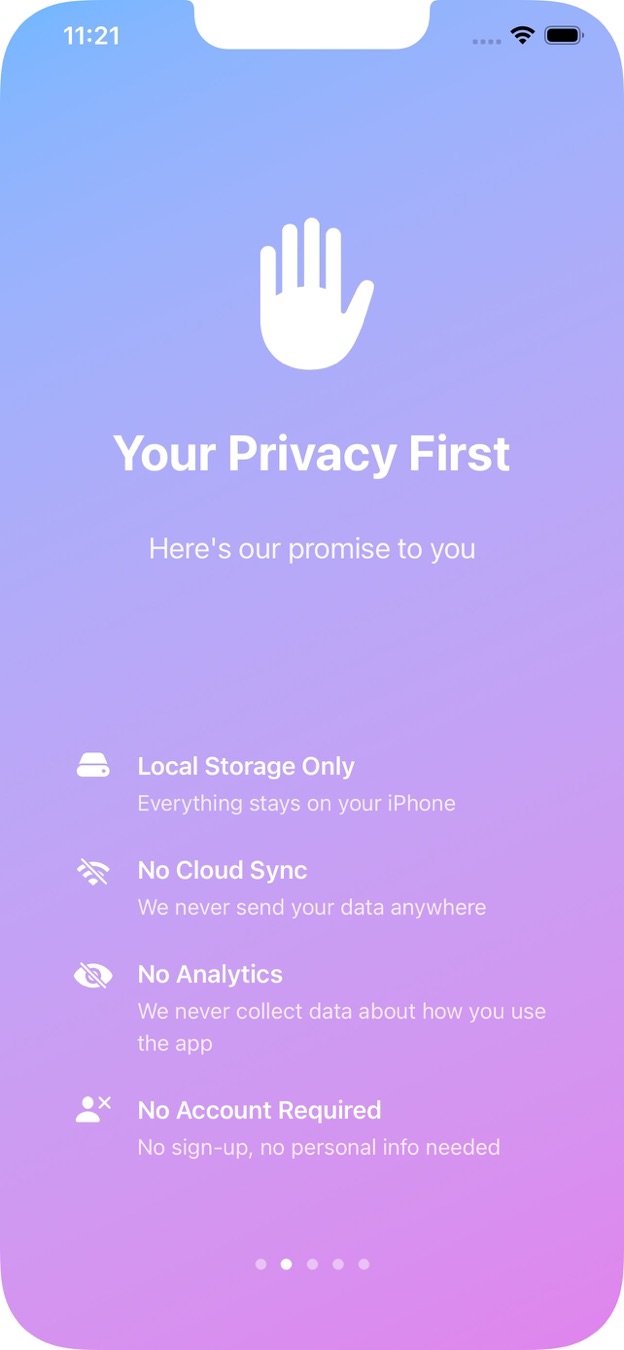
Local storage and no analytics appear as product features.
Result
Footsteps launched for iPhone and iPad on July 21, 2026.
The public product states no accounts, cloud sync, analytics, tracking, or ads.
Track complete days, correction rates, battery impact, exports, and repeat use. Public results are not yet available.
Released productOpen Footsteps on the App Store ↗