The interface stands alone.
Each state must explain the next action because staff guidance is not always available.
 Parmis Meshgi
Work 01 · Self-service
Self-service ordering must explain each choice, respond to physical input, and recover without staff help.
Read the case study ↓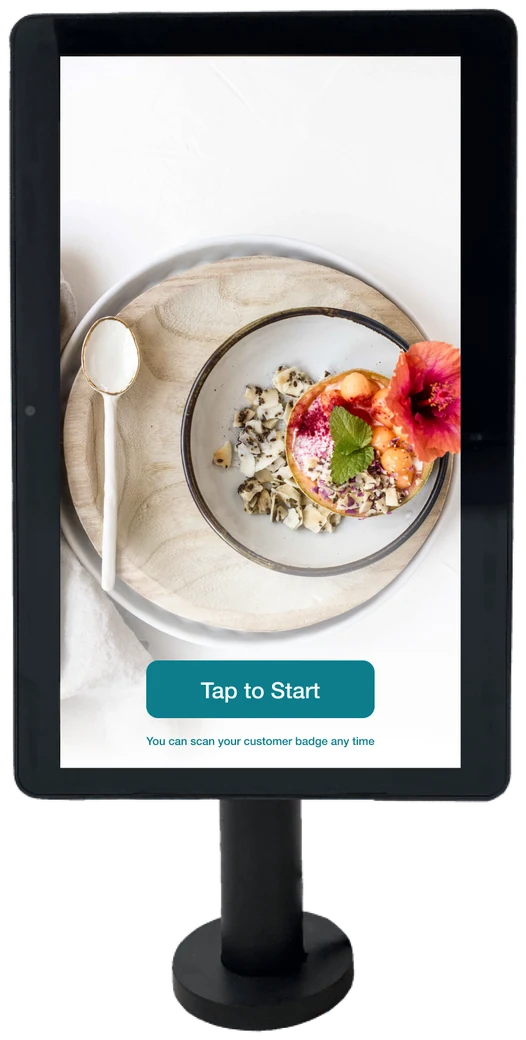
Research, interaction design, accessibility, recovery, and release review
Kiosk, mobile, and web channels
Work with design, product, engineering, and quality assurance
Including Flip, across 422 live Volanté locations on September 14, 2026
Product at scale
Volanté platform data from January 1 to September 14, 2026.
Project value
Reuse one menu structure across kiosk, mobile, and web.
Keep ordering readable through high contrast and clear controls.
Give customers clear recovery steps when hardware or payment fails.
Each state must explain the next action because staff guidance is not always available.
Unclear prompts, physical input, and hardware faults can block checkout.
Shared rules connect readable screens, tested controls, and guided recovery.
Design decisions
Backoffice defines item groups and menu tiles. The same structure supports kiosk, mobile, and web ordering.
Teams configure one menu while each channel keeps suitable interaction rules.
The high-contrast theme replaces local menu colours through the existing theme switch.
Customers can read and complete the full ordering journey in high contrast.
We refined eight quantity selectors, printed them, and tested them on the kiosk before choosing one.
The selected control reflects real distance, scale, and touch conditions.
The scale flow now covers placing food, lifting it, holding still, capture, and temporary or persistent faults.
Customers can recover without guessing what the kiosk expects.
Interactive product
Choose a service type, build an order, change its quantity, and complete checkout with public sample menu content.
Result
High-contrast and feedback improvements reached production.
The guided hardware recovery flow reached engineering handoff.
A production review found 19 related defects. Sixteen reached completion.